COVID-19 Wealth Kit

The spread of COVID-19 is changing the way we live, work and communicate. It’s sparked economic uncertainty which is already impacting businesses and people on an emotional and financial level. During this time, accountants and financial planners will play an important role as a trusted adviser to their clients, securing their financial well-being in a time of uncertainty.

We want to give accountants and financial planners the tools to navigate these difficult times, so that their clients can feel more secure about their financial future. In doing this, we’ve updated the wealth portal to give all of your clients the following:

We’ve created a really easy process for clients to update and store all of their financial information in one place so that they can not only have peace of mind, but their accountant or financial planner can go through their finances piece by piece, together.

Following the wealth check, clients will be able to access a wealth report in their client portal which they can send to their trusted adviser. The wealth report is a really simple way for clients to give their adviser their whole-of-wealth assessment, which will guide them to providing the most meaningful and holistic advice. 

Naturally some people will be concerned about their estate plans, in particular, some of your older clients and their parents.  If their needs are straight forward we have made available a free online basic will that only takes minutes to create.

The 5 worst types of clients seen in financial services

We’ve covered the 5 most popular client personas seen in financial services but what about the worst types of clients? From tyre kickers to time-wasters, we take a look at the 5 client types you probably want to avoid!

This client persona thinks they know it all. From financial products to high yielding investment strategies, these clients make you wonder why they sought advice in the first place. They are self-proclaimed market-beating experts that love to rival professional advice.

Constantly comparing, testing, searching and inquiring but never committing. The tyre kicker looks like a prospect but they are really just window shoppers. These pseudo clients can eat up large portions of your time only to jump ship to get a cheaper deal elsewhere. They tend to make purchases purely based on price, except no price is ever low enough.


Constantly rescheduling, cancelling and turning up late or not at all. No response Norman is painfully hard to get a hold of and rarely answers his phone or his emails. Sometimes found in family offices, these types of clients struggle to voice their opinions and can make arranging family finances a nightmare.

Verity is very enthusiastic – and expects 16% returns. While she wants financial advice, she doesn’t necessarily want to follow it. Results driven and extremely ambitious, this sort of client wants instant results and struggles to adopt a long-term view. With a tendency to think with the heart, they reject logical recommendations and are known to make rash decisions.


Ian is the opposite to Very Impatient Verity who doesn’t listen to advice. He wants to know every detail and asks to hear the same advice over and over. Slow to take action and fast to change their mind, these clients are risk-averse and need constant reassurance on the implications of each decision.

While these types of clients may be less-than-ideal, that doesn’t necessarily mean you shouldn’t work with them! A tailored engagement strategy can help you cut through their quirks. Get in touch today to learn how a client engagement platform can help you drive practice efficiencies, build lasting relationships, and impress even your toughest critics!

Engaging small business clients

If you look after small business clients, you’ll understand the importance of identifying their needs in order to deliver what they want – and expect. We’ve covered some of the most common client personas in the industry. Now, we’re taking a deep dive into the business owner persona, Basil – get to know him below!

Meet Basil the Business Owner 

Basil is a small business owner and family man. For the last 5 years, Basil has been the proud owner of a craft beer brewery which has grown substantially in size. But as his company has grown, keeping on top of his business finances and understanding his financial situation has become increasingly complex. As an accountant, how can you go that extra mile to engage and add value to business owners like Basil?

There are more than 2.2 million small businesses in Australia, with the sector making up 96% of the nation’s businesses. The most common industriesfor small businesses are construction (17%) and professional, scientific and technical services (12%). The 2018 Australian Accounting Industry Surveyfound accountants are considered the most important professional service provider by all SMEs and for good reason. Almost 9 in 10 SMEs have relied on accounting services at some point, and astonishingly, nearly a quarter of businesses don’t believe they have the financial literacy to run their business. 

Someone who can talk their talk 

Effective communication is fundamental in any mutual beneficial accountant / business owner relationship. Communication within small business is often largely verbal and informal, and studies have found accountants who are adept at communicating in this day-to-day style are more likely to be favoured by small business owners-managers. You can help clients see the value you provide by keeping things simple and avoiding jargon. Utilising a client’s preferred channels for communication (such as phone, mobile app, social media, etc.) is also an important component to building strong relationships.

Business strategy advice

What business owners want from their accountant has changed over time and has undeniably led to accountants wearing many hats. Business owners no longer want their accountant to just crunch numbers. They’re seeking someone who can see the whole picture and provide business advice, such as virtual CFO services, goal setting and technology systems. 1 in 5 SMEsexpressed they would like their accountants to help with business strategy in addition to the services they already provide. 

A proactive service provider

Business owners are busy people; they often compromise family life and work long hours. More often than not, they don’t have time to investigate the areas of their business that could function better. Clients don’t just want business advice when they ask for it, they want their service providers to understand their situation and pre-empt potential risks. In fact, failing to adapt to a client’s changing business needs is perceived as one of the most common reasonsSMEs change their professional services firm.

Become a strategic technology consultant  

The industry shift away from traditional accountancy services towards business consultancy has been a hot topic touted by many leaders in the industry (such as Xero, MYOB and Sage). From simplifying payroll to improving productivity, business owners are turning to cloud-based technology to save time and improve their bottom line. In the face of technological change, there’s a big opportunity for accountants to seamlessly provide advice on the best business tech stack.From CRM platforms to automated invoice systems, it’s likely the technology used within your firm can help simplify your clients’ businesses too. Advising clients on how to review and implement the right tech for their small business, particularly if you’re already using these tools yourself, is an easy way to add value as a strategic consultant and drive new efficiencies for your clients. 

Help them see the bigger personal wealth picture 

Most business owners go into business to build personal wealth and ultimately, live a good life. However, because for many so much of their wealth is tied to their business, they don’t often think about how to grow their personal wealth outside of that (or the risk involved in not diversifying their income). Taking into account their wider financial picture and broader life goals is an easy way to help them understand the financial intersections between business and personal, and position yourself at the heart of their financial world. 

For example, in a recent blog post for business owners, The Blue Rock highlighted that business owners often think they don’t need superannuation because in effect, their business is their super. However, superannuation can be a great way to build wealth by implementing a tax effective strategy to extract profit out of the business and into super – something which ultimately could end up benefiting the business.

Getting a comprehensive view of a client’s financial position – from assets and liabilities to goals, insurance status, and estate plans> – doesn’t need to be hard. Talk to us today about how the myprosperity wealth portal can help you get the information you need quickly and efficiently, then leverage powerful data across your entire customer base to uncover revenue opportunities.

3 strategies engage retirees

Ray is recently retired. While he doesn’t consider himself as tech-savvy, he owns a smartphone and enjoys keeping up with his children and grandkids on Facetime. Over his working life, Ray has accumulated various assets so preserving his wealth for his family is top of mind. How can advisers harness technology to engage retired clients like Ray?

People are living longer and Australia’s ageing population is rapidly increasing. In 2017, there were 3.8 million Australians aged over 65. By 2057, it is projected there will be 8.8 million (22% of the population). They are also one of the wealthiest segments in the population, accounting for 26% of the nation’s wealth.

For many retirees, financial advisers and accountants are much more than people who help them manage their finances. They’re trusted concierges who help them meet their everyday needs and fulfill their lifestyle goals. As a result, the assistance they provide goes beyond maximising net worth to include social and personal transitions, such as living arrangements and aged care planning.

Outliving their nest egg and costly health issues are real concerns for the over 65 cohort so budgeting and cashflow management are paramount, along with staying abreast of compliance requirements and tax changes.

We live in a world where sharing personal details in exchange for a personalised service is almost second nature. We give Uber our live location to quickly hail a ride and allow Netflix access to our viewing history so it can suggest new TV series we might enjoy. But younger generations aren’t the only ones taking advantage of the benefits technology has to offer.

There is a commonly-held belief that over 65s don’t engage with technology, but this stereotype is beginning to crumble. The biggest mobile usage growth in 2017 came from older users, with a five point increase for 55-64 year olds and a nine point increase for 65-75 year olds.

Even ‘Digital Phobics’ or those that typically avoid using new technology are for the most part already using digital devices to stay connected with their friends, family and grandchildren. In fact, according to a 2015 study by the Pew Research Centre, the majority of seniors surveyed described smartphones as “freeing” and “connecting”.

According to a 2018 study by FactSet,59%of clients find it difficult to understand complex graphs and charts used by their wealth managers so communicating data in a meaningful way can be a challenge. The same study also found data visualisation can help to build trust with wealth investors and can be particularly powerful to engage older clients.

Data visualisation could take the form of a simplified chart showing projected investment income over time or a cashflow breakdown to help clients see how much they spend. User-centric data delivery helps advisers strike the balance between being comprehensive to demonstrate value and presenting information in a way that is easily understood. After all, a picture says a thousand words (or data points).

If you only take away one thing from this series on how to engage with specific client personas it should be that personalisation is key – and retirees are no exception.

Particularly amongst older clients where digital literacy levels are likely to vary, segmenting clients beyond their personal financial situation to account for their attitudes towards technology can help advisers gain deeper insights and deliver a better, more personalised service.

While not all digital solutions will be suitable for everyone over 65, client facing technology enables advisers to deliver a more scalable service. With features ranging from live balance sheets to system generated wills and tailored Executor Kits, platforms like myprosperity can help advisers scale as they adapt the delivery of their services to meet the needs and tech adoption levels of their retiree clients.

Are your senior clients technophobes or technolovers? How are you adapting your services to meet their needs?

3 digital strategies to attract HNW clients

Hilary is the ultimate HNW stereotype: she loves yachting, opera and expensive champagne. Of course in reality, high net worth individuals (HNWI) are an incredibly diverse and eclectic group. But they do have some common denominators, such as high expectations when it comes to service and lack of time. So how can advisers deliver an experience to successfully engage this growing market?

Australia has the third largest segment of high net worth individuals in Asia-Pacific, with more than 230,000 people with $1 million or more in investable assets – and this figure is on the rise. From 2008 to 2016, HNW investors grew 41% from 250,000 to 425,000. But in the same period, the number of HNW investors using a financial adviser grew just 16% from 150,000 to 180,000.

In practice, what this has meant is that for most advisers, only 20% of their client base are considered high net worth.

While these figures might suggest a decline in the demand for advice amongst HNWs, this does not appear to be the case. According to The Investment Trends “2018 Financial Advice Report” 54% of HNW clients still say they have advice needs, with longevity protection, investment strategy and retirement planning topping the list.

Unsurprisingly, high net worth clients want a personalised service: a CEB 2018 Client Experience Survey found that 63% of HNW clients highly value advisers who personalise advice. But a personalised service goes beyond that: tailored communications directly relevant to their financial situation and an emphasis on transparency are key to providing a personalised experience.

High net worth clients also value their time. Beyond financial gains, they expect flexibility and simplicity. Advisers who are proactive (such as by keeping an eye on clients’ situations to spot potential problems and opportunities) and provide guidance along with clear explanations around financial decisions, find it easier to build a long-term, trusting relationship.

Rather than servicing your HNW clients with a mountain of documents, across multiple folders, spreadsheets and logins to investment platforms, save them (and yourself) some time by aggregating their entire financial world in one place where you can collaborate. Whether it’s a carefully organised digital folder or a comprehensive client portal like myprosperity, you’ll both appreciate the transparency and efficiency gains this creates.

Even better, as most HNWIs work with multiple financial professionals, consolidating clients’ finances makes it easy for you to coordinate with their team (in myprosperity, you can invite others into your client’s portal and tailor their permissions via myteam and position yourself at the heart of your client’s financial world.

HNW individuals are avid technology users. In fact, according to a Capgemini report, 82.5% of under-40 HNWIs expect all or more of their wealth management to be conducted digitally in the next five years. If you don’t already have a digital strategy in place, now is the time to start.

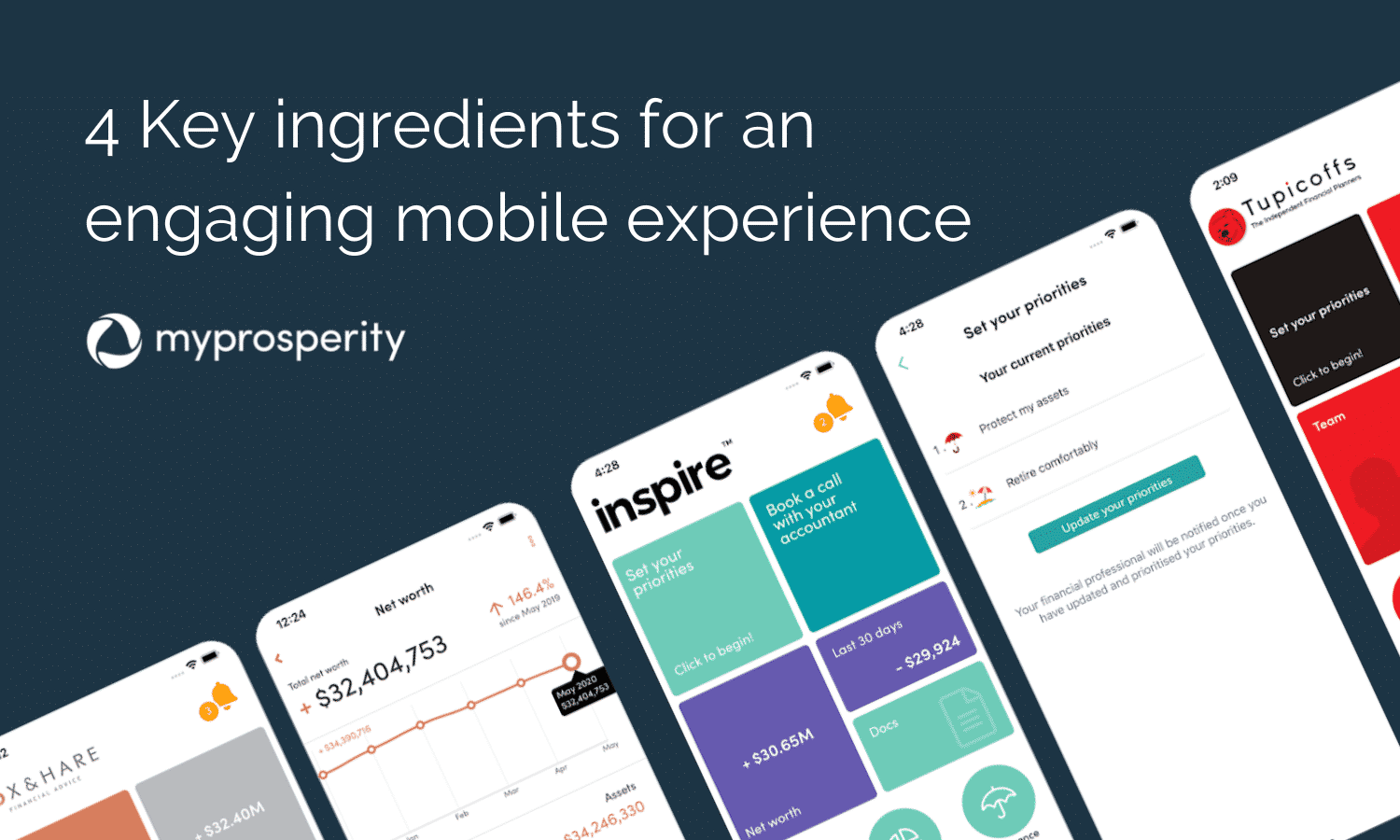
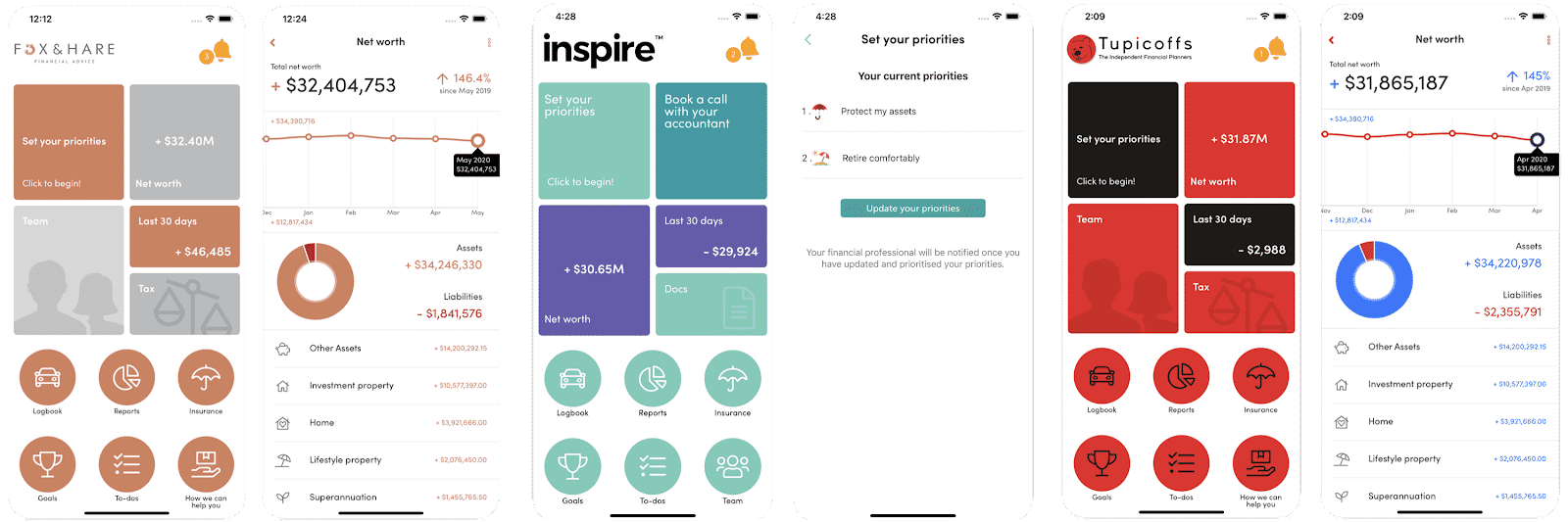
A personal finance app, such as the white-label one included in myprosperity’s Mobile First Plan can help you position your firm’s premium offering with cutting-edge technology and deliver an exceptional – personalised – digital experience to match.

For many high net wealth clients, it’s not all about money: instead, it’s about what the money can achieve. Whether it’s leaving a legacy for their children or philanthropic giving, understanding what motivates your clients, their goals and challenges, is critical to delivering a personalised service.

Once you’ve spent time understanding their needs, don’t squander that goodwill by sending HNW clients mass email campaigns or generic updates with little relevance to their personal situations. Instead, take them off your primary mailing list and send them fewer but more personalised updates, such as custom monthly reports.

With myprosperity, you can take personalisation a step further with features like the Executor Kit, a tailored, pre-populated document outlining a client’s assets, liabilities, and personal wishes to make things as easy as possible for their executor. The more personalised the service you provide, the more you’ll demonstrate a thorough understanding of their situation and build trust.